Kakamega Site visit January 2026
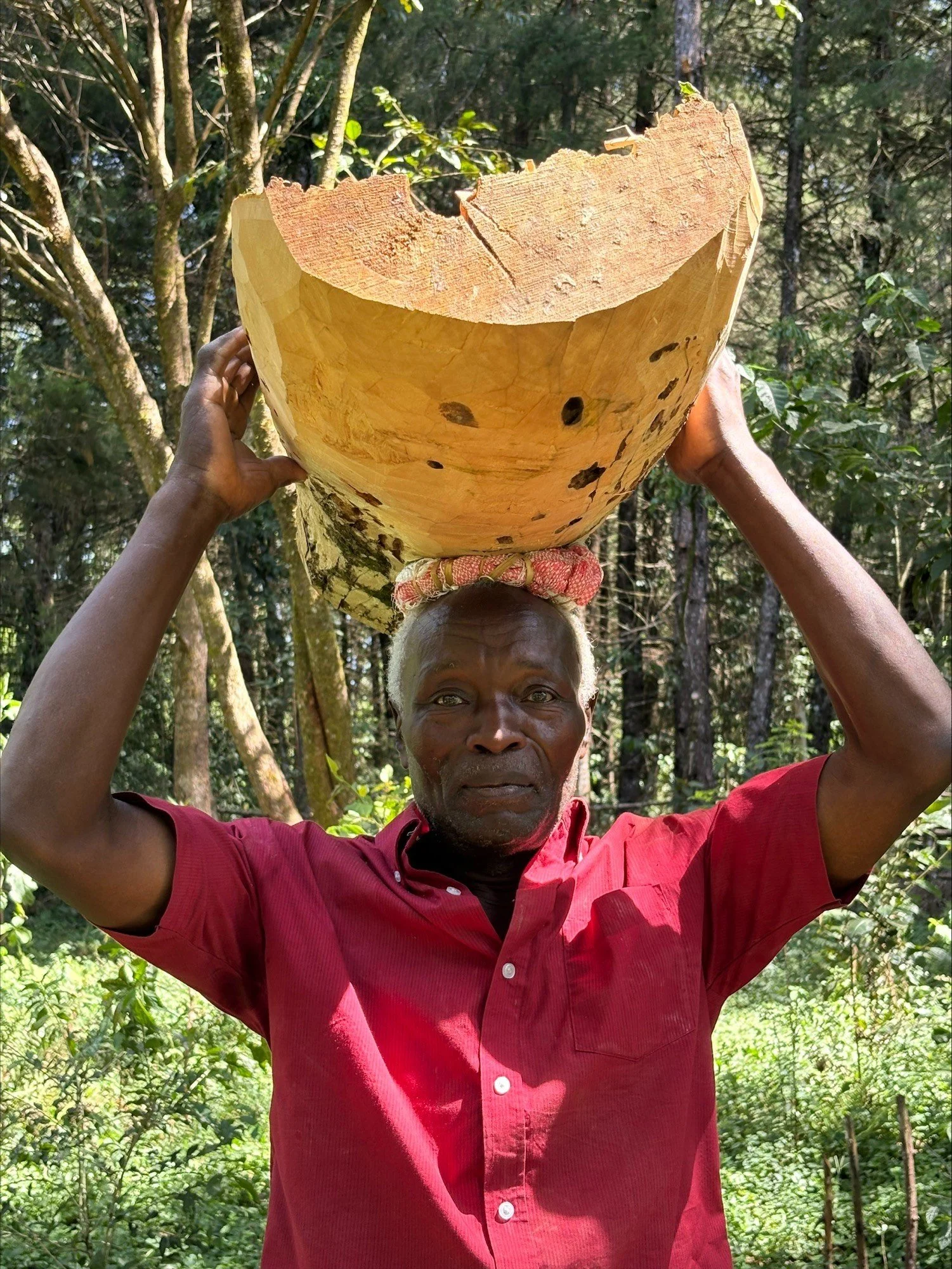
Lovely local man delivering his hand made bee hive
It is one year since we first visited our biodiversity project in Kakamega rain forest. Then, the very notion that we could bring the invasive guava tree population in hand, and plant up pockets of the rainforest with indigenous species, seemed ambitious to say the least.
So it was with some trepidation that we travelled to Kasumu to meet our wonderful project leader and passionate Tree Specialist Mark Nicholson (no relation).
Mark drove us in his 4x4 for another hour into the rainforest, where you leave tarmac behind and the potholes make Oxfordshire roads look like motorways. Coming to a halt at a gap in the trees, we all hopped out and followed Mark into the forest.. we were going to go and measure the growth from January 2025 to January 2026. To be fair to this challenging project, we had well managed expectations as we fully understand how difficult it is to establish trees … so imagine our joy when every tree was there to be counted and had grown substantially since last year. We were looking at a forest.
The photograph below shows a Cordelia milenia, less than 1m tall last year. This tree has become more rare because it has been over harvested.
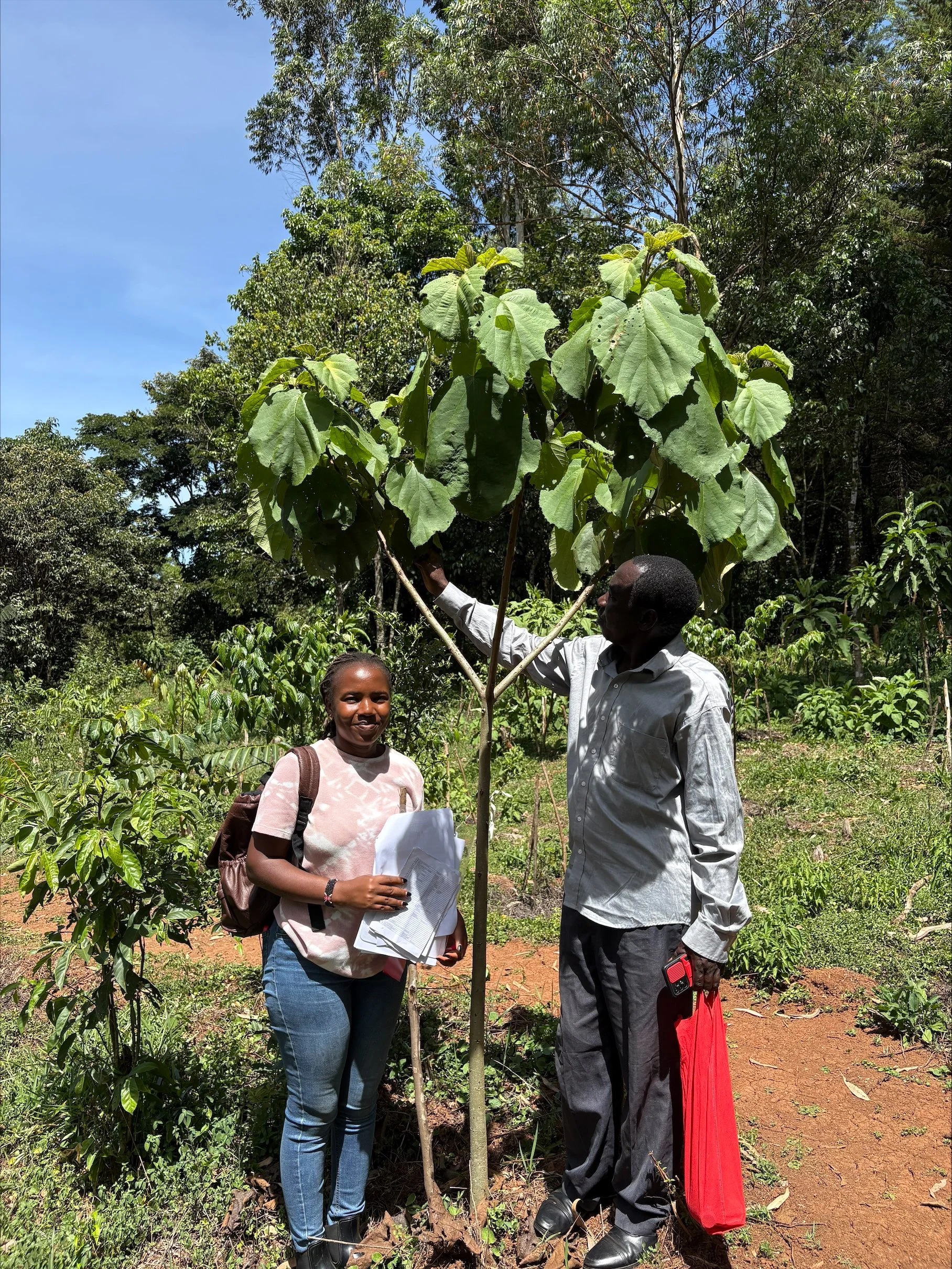
Cordelia milenia
Germination of the seed is very low and so this project is important to the preservation of the species. The Wood is useful in making local tools as it is lightweight but very hard and typically might be used for the yolk for Oxon to pull a plough.
There are now three plots in our project:
Plot one is the first plot where the guava was cleared and trees have been planted and now they stand tall as seen in the photo above. Plot two shows the later stages, planted early last year, and is coming along very nicely. We were excited to visit plot three which has been newly acquired in agreement with the Kenyan Forest Service. Here the guava was dominant and notably there was no under storey, no herbaceous layer, no shrubby layer and no climbers. It was biodiversity depleted.
Chainsaws are banned in the Woodland as it must be preserved and so our team have tackled the guava using machetes and taking the timber for fences to keep cattle out of the enclosures. It is hard hot work but the team do not complain as they are passionate about the project and really believe in what they are doing.
Phyllis and Jane systematically work through the plantation removing guava shoots … this tree weed is persistent and has taken much more management than we anticipated!
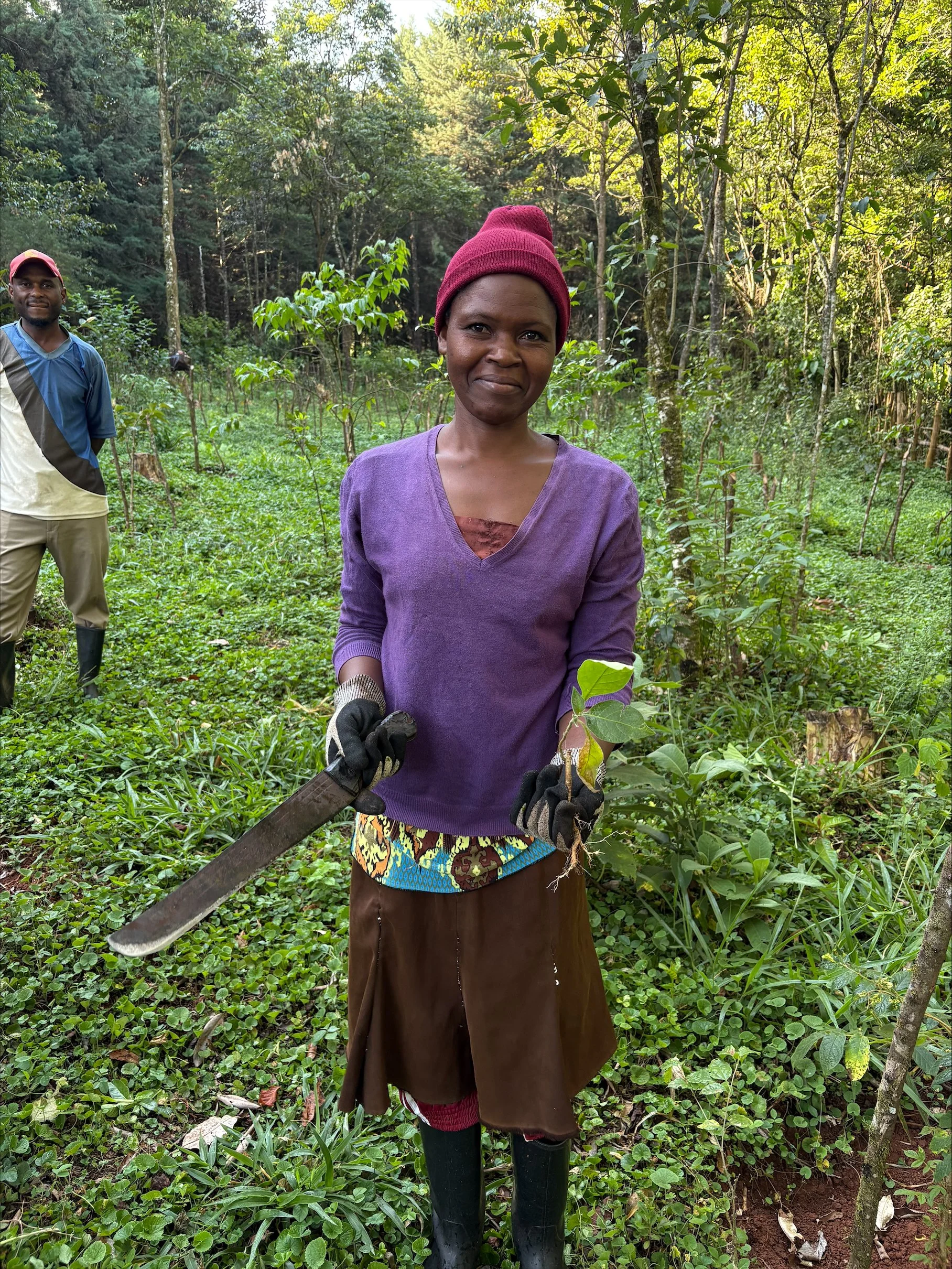
Phyllis at work
The men work hard in the plantation to hand scythe down the vegetative undergrowth to enable the trees to be seen and monitored in year one. They’re only too aware that there are poisonous snakes in this forest but help it at hand with the arrival of “snake Mary”. Mary is a Kenyon legend, educating people about the beauty and habits of all different types of snakes. She’s a very young beautiful woman who absolutely knew her craft and took our party into a bamboo plantation, nearby, to show how to find and identify snakes…. It may not surprise you to learn that I stayed back to measure trees.!
This project has been established in absolute adversity and it is a tribute to the hardwork and dedication of the team on the ground from Mark, to Cheryl, George, Eddie and Kevin… they have worked tirelessly to nurture these trees and ensure the 600 different indigenous species are preserved and protected for generations to come.
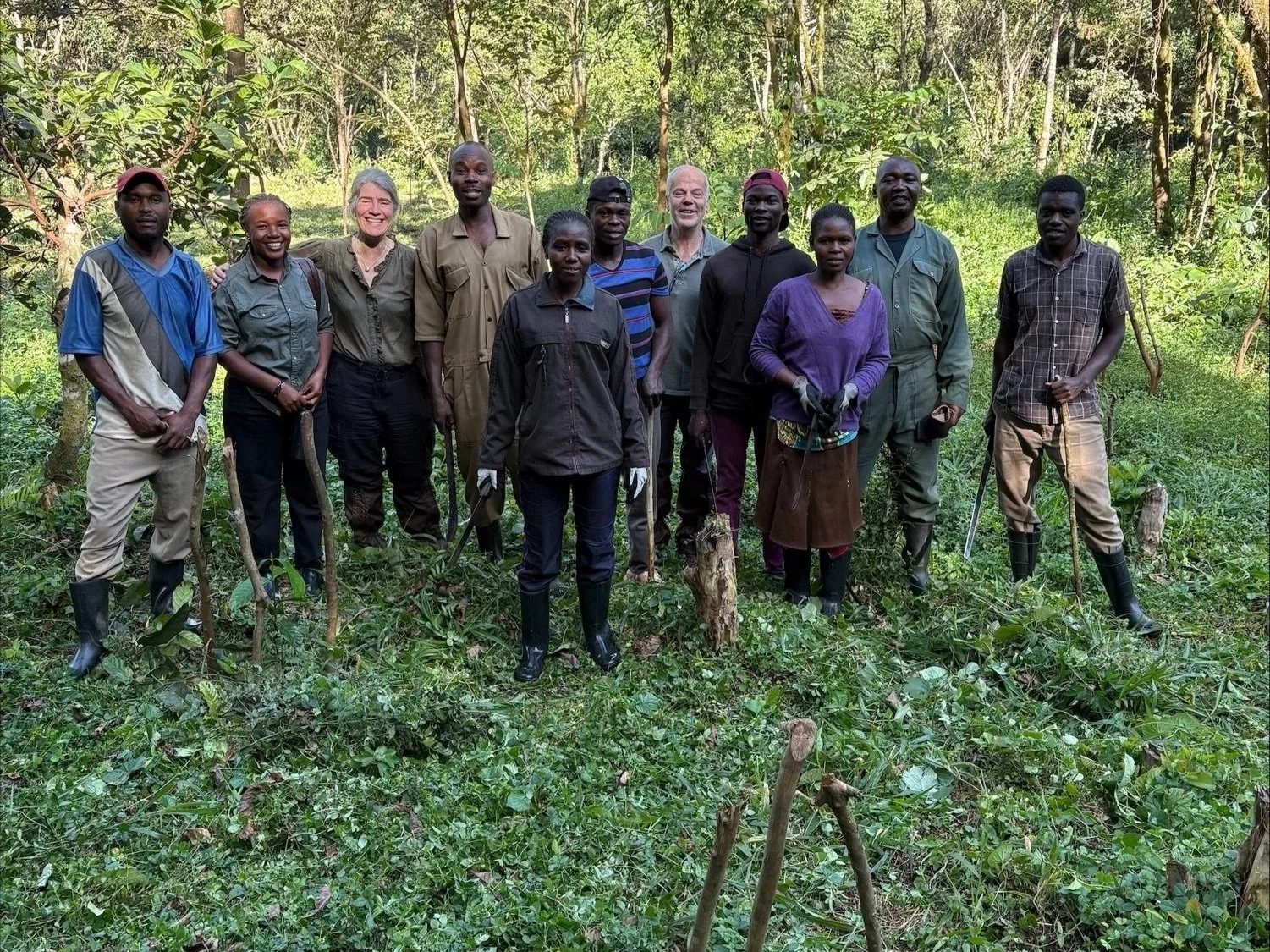
Our team in Kakamega
This is essential work as all of these incredible species have their uses to nature and society.
The forest is protected, but much of it is dominated by invasive guava or cultivated Eucalyptus and Cyprus. It is only projects like these that will enable a biodiverse canopy to re-emerge and support local people in building an economy and an ecosystem that is more sustainable.
The only Timber that could be taken from the forest currently is dead dood, and a trail of women can be seen walking the forest roads with up to 4 m lengths of timber piled high on their heads for approximately $1.50 per day.
I don’t pretend to understand all of the politics or all of the opportunities, but I dream of a world where the forest could be managed in a continuous cover forest system that supports wildlife and nature and human activities in a sustainable way for decades to come.
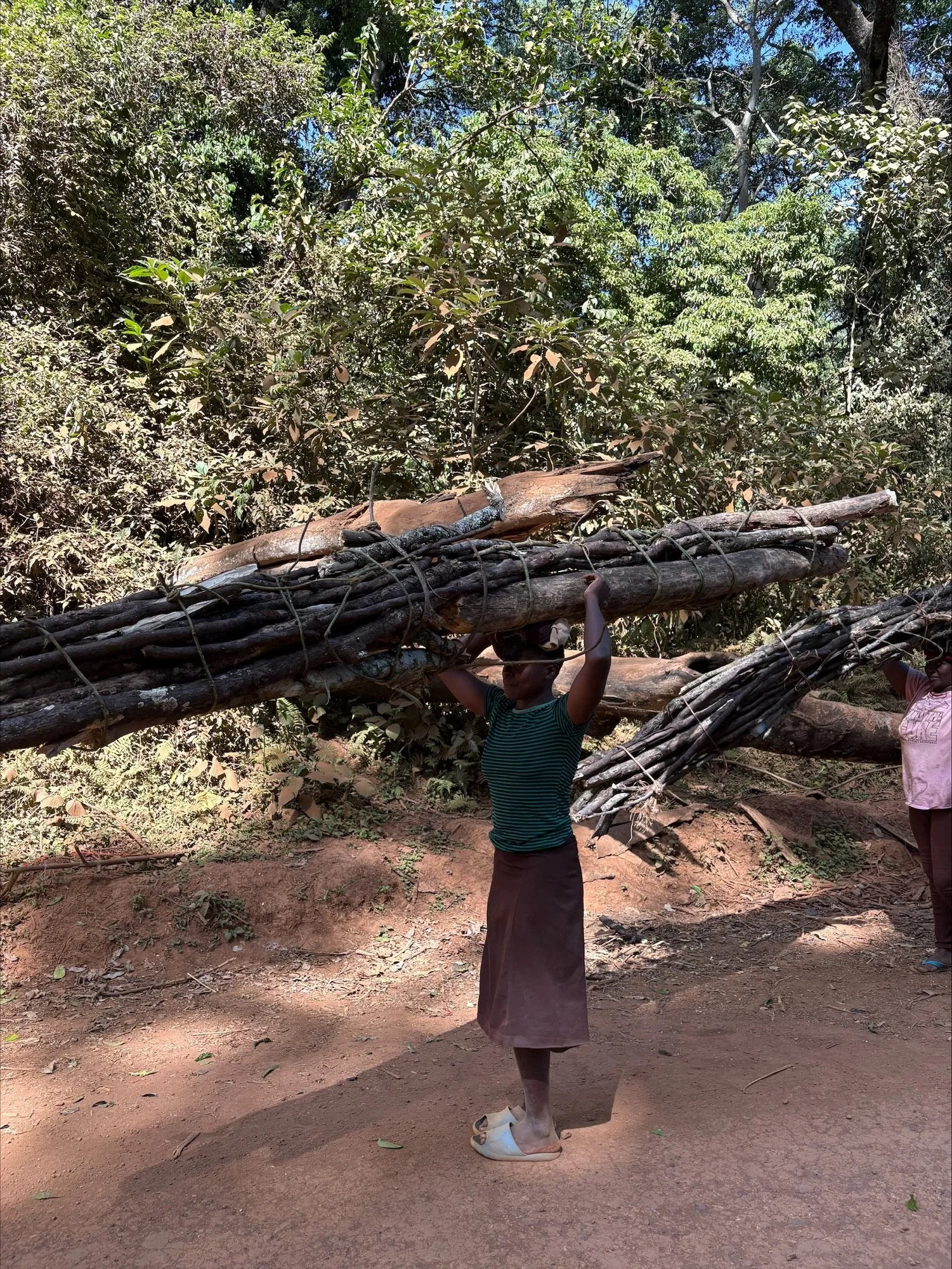
Wood is vital to the local economy
If you are interested in being part of our Kakamega Story by making a donation or keeping in touch with our work, please do register interest by clicking below. A single tree may cost in the region of $10-$20 and any contribution would be most welcome as we could achieve so much more……
Asante sana